Cheese is made from milk, so you might assume it is vegetarian. The catch is rennet, the enzyme that makes milk set into curds. Traditional rennet comes from the stomach of a young animal, which means some cheeses are not vegetarian at all.
Animal rennet vs vegetarian rennet
Animal rennet comes from the lining of the stomachs of ruminant animals, usually cows (Vegetarian Society). The Vegetarian Society accepts only vegetarian rennet in cheese it approves (trademark criteria).
Vegetarian rennet does the same job without slaughter. The main types are:
- Microbial rennet, made from fungi or other microbes.
- Fermentation-produced chymosin, the same enzyme as calf rennet but made by fermentation.
- Plant coagulants, such as thistle, used in a few traditional Spanish and Portuguese cheeses.
A lot of the cheese sold in UK supermarkets uses vegetarian rennet, but not all of it. The only reliable way to know is the label.
Cheeses that always use animal rennet
Many famous European cheeses have protected status (PDO). Their official rules say exactly how they must be made, and for several of them that includes animal rennet. If the cheese carries the protected name, it is not vegetarian.
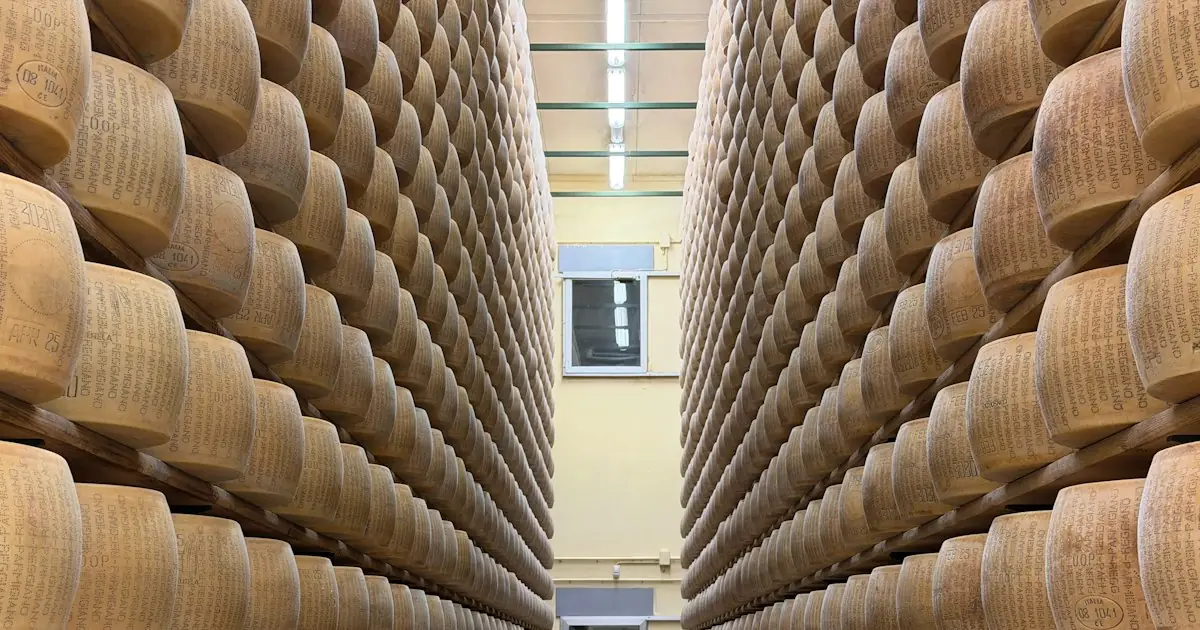
- Parmigiano Reggiano: the official specification lists the ingredients as cow’s milk, salt and calf rennet, and says only calf rennet can be used.
- Grana Padano: the specification says coagulation uses calves’ rennet. It also allows lysozyme, a preservative from egg, which matters if you avoid eggs.
- Gorgonzola: the specification lists whole cow’s milk, calf rennet and salt.
- Pecorino Romano: the rules require lamb rennet from animals reared and slaughtered in the production area.
- Mozzarella di Bufala Campana: the EU product summary says calf rennet is added to coagulate the milk.
In the UK, the word “Parmesan” is treated as Parmigiano Reggiano. The Vegetarian Society points out that this means calf rennet, so a dish described as having Parmesan is not vegetarian unless the restaurant has swapped in a vegetarian hard cheese.
Cheeses that are usually, but not always, animal rennet
- Roquefort, Gruyère, Emmental, Camembert and Raclette: the Vegetarian Society lists these as usually not vegetarian, along with Gorgonzola, Manchego and Pecorino Romano.
- Manchego: the official rules allow “natural rennet or other authorised coagulation enzymes”, so a vegetarian version is possible, but the Vegetarian Society lists Manchego as usually not vegetarian. Check the pack.
- Feta: the rennet varies by maker, so check the pack for a vegetarian label.
- Halloumi: often labelled vegetarian, for example Tesco Halloumi and Yamas! Cypriot Halloumi PDO at Tesco, but not every pack says so. Look for the vegetarian label, especially when eating out.
British cheeses can go either way
The rules for Blue Stilton (specification) and West Country Farmhouse Cheddar (specification) allow animal or non-animal rennet. Some makers use one and some the other, so look for the vegetarian label rather than assuming.
How UK labels show vegetarian cheese
UK supermarkets make this fairly easy. Look for one of these:
- “Suitable for vegetarians” or a green V symbol from the retailer.
- The Vegetarian Society Approved trademark, which is checked independently.
- “Vegetarian rennet” or “microbial rennet” in the ingredients.
Be wary if the ingredients only say “rennet” with no vegetarian claim on the pack. The Vegetarian Society notes that animal rennet can also appear as “traditional rennet”, “pepsin” or “animal enzymes”. For example, Cook Italia Grated Hard Cheese at Tesco lists milk, salt, rennet and egg lysozyme, and carries no vegetarian badge.
Some products now say the opposite clearly. Sacla’s Classic Basil Pesto says “Made with non-vegetarian cheese” (Morrisons listing), and Filippo Berio Classic Pesto says “Non-Vegetarian Cheese” (Morrisons listing).
For more on label wording, see our guide to UK food labels.
Vegetarian alternatives to Parmesan
If a recipe calls for Parmesan, a vegetarian “Italian hard cheese” works the same way. These are sold in the UK and labelled vegetarian:
- Sainsbury’s Stamford Street Co. Italian Hard Cheese: labelled “Suitable for vegetarians” (Sainsbury’s listing).
- M&S Italian Hard Cheese: made with microbial rennet and marked suitable for vegetarians (Ocado listing).
- Tesco Italian Pecorino: described as a vegetarian hard cheese and marked suitable for vegetarians (Tesco listing). This is different from Pecorino Romano, which always uses lamb rennet.
Listings checked on 27 November 2026. Some brands sell a vegetarian version alongside their standard cheese, so check the pack you pick up.
For dairy-free options, see our vegan supermarket guide.
Restaurant warnings: pesto and Caesar salad
Two dishes catch out vegetarians more than any others.
Pesto. Classic Genovese pesto is made with Parmigiano Reggiano or Grana Padano, and often Pecorino too. Most jarred pesto in UK shops uses these cheeses. Restaurant pesto pasta, pesto pizza and pesto dressings are often not vegetarian even when the menu marks the dish with a V. Ask whether the pesto uses vegetarian cheese. Vegetarian and vegan jars exist, so look for the label.
Caesar salad. A Caesar dressing usually contains anchovies and Parmesan, so it fails on two counts. Bottled versions can list both: Pizza Express Caesar dressing contains anchovy paste and Parmigiano Reggiano (Morrisons listing). Restaurant Caesar salads usually follow the same recipe, even without chicken. Anchovies also turn up in Worcestershire sauce: see is Worcestershire sauce vegan?
Other dishes to ask about: risotto finished with Parmesan, gnocchi, Italian soups, and anything “topped with shaved Parmesan”. Our eating out tips cover how to ask without fuss.
Quick checklist
- Pre-packed cheese: look for “Suitable for vegetarians” or the Vegetarian Society logo.
- Parmigiano Reggiano, Grana Padano, Gorgonzola, Pecorino Romano or Mozzarella di Bufala Campana: their rules require animal rennet.
- Deli counter or cheese shop: ask about the rennet.
- Eating out: ask about Parmesan, pesto and Caesar dressing.
Not sure about a particular product? Use our Is it vegetarian? checker, or read about hidden animal ingredients.
FAQ
Is Parmesan vegetarian?
No. In the UK, Parmesan means Parmigiano Reggiano, which must be made with calf rennet. Look for a vegetarian Italian hard cheese instead, such as a supermarket version labelled suitable for vegetarians.
Is Grana Padano vegetarian?
The official Grana Padano rules require calves' rennet, so cheese made to those rules is not vegetarian. Packs often list only 'rennet', so check the label: our Grana Padano product pages say check the label for that reason. It can also contain lysozyme from egg.
Is Cheddar vegetarian?
Usually, but not always. Much UK Cheddar is made with vegetarian rennet and says so on the pack, but some traditional farmhouse Cheddar uses animal rennet. Check for a vegetarian label.
Is pesto vegetarian?
Most classic pesto is not, because it is made with Parmigiano Reggiano, Grana Padano or Pecorino Romano. Some jars say 'made with non-vegetarian cheese'. Choose one labelled vegetarian or vegan.
Check any product's vegan and vegetarian status: scan the barcode at isitvegan.co.uk.
Updated 27 November 2026: reworded one line about checking the label. Later that day we linked each cheese specification and product, removed claims we couldn’t source (Comté, Reblochon, Beaufort, Twineham Grange, Creamfields, Bella Lodi and Cardini’s), and added halloumi.