Updated 27 November 2026: merged in our vegan hidden-ingredients guide, corrected the gelatine E-number and the shellac dates, and added a source for each product example. We also softened three lines that overstated what a vegetarian label proves. The Guinness line now uses one dated sequence (2017, 2018, January 2022) sourced to Barnivore.
Looking up one ingredient? Our ingredient and E-number pages explain 70 of them, from E471 and whey to carmine and shellac, with UK products that contain each one.
Plenty of foods with no meat in them are still not vegetarian. The animal ingredient is often small, has a technical name, or is hidden inside another ingredient like “cheese” or “sauce”. Look for these on UK labels. The product examples link to their Open Food Facts records, checked on 27 November 2026. Recipes change, so check the pack you buy.
Gelatine
Gelatine is made from animal skin, bones and connective tissue. On UK labels it appears as “gelatine”, sometimes with the animal, such as “beef gelatine”. It has no E-number: it is treated as a food ingredient rather than an additive, so it is not on the Food Standards Agency’s list of approved additives. Some older E-number lists still call it E441. It turns up in more places than sweets:
- Yoghurts and desserts: Müller Corner Bliss Cheesecake Inspired lists gelatine. Standard fruit Corners such as Müller Corner Strawberry use pectin and guar gum instead, so check which Corner you have.
- Marshmallows: most standard marshmallows are set with gelatine. Vegetarian and vegan brands use other gelling agents and say so on the pack.
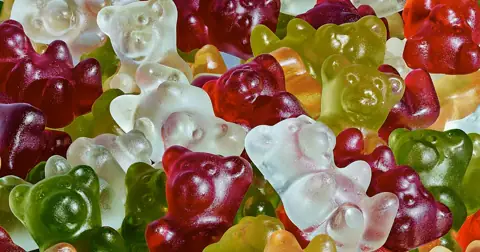
- Jelly sweets: Maynards Bassetts Jelly Babies contain gelatine. See our vegetarian sweets guide.
- Cereal bars and squares with a marshmallow layer.
Animal rennet
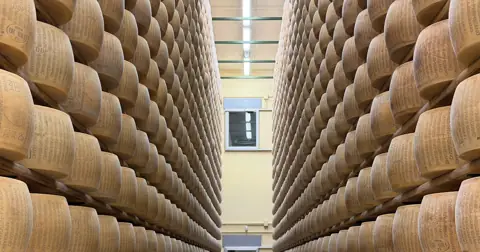
Rennet sets milk into cheese. Animal rennet comes from the stomach of young calves, lambs or kids. Parmigiano Reggiano, Grana Padano, Gorgonzola and Pecorino Romano must be made with it. The cheese then turns up inside other foods, such as pesto, ready meals, sandwiches and crisps.
Sacla’ Classic Basil Pesto, for example, contains Parmigiano Reggiano and Pecorino. If an ingredients list only says “rennet” and the pack makes no vegetarian claim, assume it could be animal. Full guide: is cheese vegetarian?
Anchovies and Worcestershire sauce
Lea & Perrins Worcestershire Sauce lists anchovies. That means anything made with it can contain fish: Bloody Marys, Welsh rarebit, gravies, marinades and some dressings. Caesar dressing usually contains anchovy and Parmesan-style cheese, so check the label. Henderson’s Relish is a fish-free alternative and carries the Vegetarian Society Approved vegan mark. See is Worcestershire sauce vegan?
Isinglass
Isinglass is a gelatine-like substance from fish swim bladders, used to clear beer, cider and some wine. It does not have to be shown on the label or pump clip, which makes it hard to spot.
Guinness stopped using it in keg Draught in 2017, said in January 2018 that Draught in bottles, cans and kegs was brewed without it, and confirmed this again in January 2022 (Barnivore: Guinness). Many traditional cask ales are still fined with it. Barnivore collects brewers’ replies beer by beer, and brewers can change their methods, so look for beers labelled vegetarian or vegan. More in our vegan beer and wine guide.
Carmine, cochineal or E120
This red colour comes from crushed cochineal insects, and the Vegetarian Society does not allow it. Many UK brands have switched to beetroot, paprika or other plant colours, but it still appears in some products. Dr. Oetker Hot-Pink Gel Food Colour lists E120 carmines, and Müller Corner Strawberry Shortcake lists carmines too. Check pink and red cakes, icing, sweets, yoghurts and drinks.
Shellac or E904
Shellac is a resin made by lac insects, used as a shiny glaze on some sweets, chocolates, coated tablets and fruit. Many vegetarians avoid it. The Vegetarian Society stopped approving new products containing shellac in January 2022 and gave products it had already approved until 31 December 2023 to remove it, following the ISO 23662 definition of vegetarian food. Its trademark criteria now list shellac as a barred ingredient. A product with shellac can still carry a shop’s own “suitable for vegetarians” line, so read the ingredients. Jelly Belly jelly beans, for example, list E904 among their glazing agents.
L-cysteine or E920
L-cysteine is used to soften dough in some bread and bagels. It can be made from feathers or hair, or by fermentation, and the source does not have to be declared. In May 2026 the Real Bread Campaign said it is highly unlikely any UK manufacturer knowingly uses animal or human L-cysteine, based on its own investigation, but the label alone can’t prove it. Some brands make it clear: Warburtons Bagels list “E920 (Vegetarian)” and carry the Vegetarian Society Approved vegan mark.
Lard, suet and dripping
These are animal fats. Lard is from pigs; suet, dripping and tallow are usually from cattle. Watch for:
- Pastry: traditional hot-water crust and some shortcrust are made with lard, so ask about pies and pasties from bakeries and butchers.
- Suet: Atora Shredded Beef Suet is 85% beef fat. Atora also makes a Vegetable version.
- Dumpling mixes: the Open Food Facts record for Aunt Bessie’s Dumpling Mix lists beef suet.
- Chip shops: some still fry in beef dripping. Ask.
Animal stock and chicken fat
Soups, gravies, risottos, stock cubes and flavoured rice can contain chicken or beef stock even when no meat is shown on the pack. Bisto shows why you need to read the label: Bisto Favourite Gravy Granules have no meat ingredients, but Bisto Best Chicken Gravy contains chicken powder.
E471 and other grey areas
E471 (mono- and diglycerides of fatty acids) is an emulsifier found in bread, cakes, ice cream and spreads. It can be made from plant oils or animal fat, and labels rarely say which. A vegetarian or vegan label means the maker says the source is non-animal. Without one, you would need to ask the brand.
Other ingredients to treat with care:
- “Flavourings” can occasionally be animal-derived.
- Eggs are vegetarian, but the Vegetarian Society only approves products that use free-range eggs.
For a full list of E numbers, see our UK E numbers guide.
For vegans also: milk, egg, honey, vitamin D3 and beeswax
Everything above matters to vegans too. These extra ingredients are fine for most vegetarians but not for vegans:
- Milk and its derivatives: whey, casein, caseinate, lactose, milk powder and butter. Milk is a named allergen, so UK labels must emphasise it in the ingredients list, usually in bold. Lactose is milk sugar and turns up in crisps, sauces and some medicines.
- Egg: also a named allergen, so it is emphasised too. Look for egg white, egg yolk, albumen and dried egg, and remember egg can be used to glaze bread and pastry.
- Honey: not an allergen, so it isn’t in bold. It is common in cereals, granola, bread, sauces and snack bars. Kellogg’s Crunchy Nut lists honey, for example.
- Vitamin D3: often made from lanolin, the grease in sheep’s wool, though vegan D3 from lichen exists. Vitamin D2 is not from animals (Vegan Society). The big plant milks use D2: Alpro Soya Original and Oatly Semi both list vitamin D2. Cereals and spreads that only say “vitamin D” don’t tell you the source, so unless the pack says vegan, ask the brand.
- Shellac and beeswax (E904 and E901): both come from insects. Jelly Belly lists E901 as well as E904. The Vegan Society also warns that some apples and citrus fruit are coated with shellac.
The easiest checks are the Vegan Society sunflower trademark, the Vegetarian Society Approved vegan mark, or scanning the barcode.
How the Vegetarian Society trademark works
The Vegetarian Society Approved logo is a licensed trademark. Companies submit every ingredient for assessment, and the Society only approves products that meet its criteria:
- No ingredients or processing aids from slaughter. That rules out meat, fish, stock, animal fats, gelatine, animal rennet, insects, shellac and carmine.
- Eggs must be free-range.
- Manufacturers must take all reasonable steps to avoid cross-contamination with non-vegetarian products.
- No genetically modified organisms, although vegetarian rennet is accepted.
- No animal testing by the producer for the product.
There is also a Vegetarian Society Approved vegan mark. A shop’s own “Suitable for vegetarians” label is useful too, but it follows the retailer’s own rules rather than the Society’s.
Quick checklist
- Look for “Suitable for vegetarians” or the Vegetarian Society logo first.
- Scan for gelatine, rennet, anchovy, carmine/E120, shellac/E904, suet, lard, dripping, stock and animal fat.
- Remember isinglass doesn’t have to appear on the label, so check beer and wine with the brand.
- Treat E471, E920 and “flavourings” as “ask the brand” if there is no vegetarian claim.
- Vegan? Add milk, egg, honey, vitamin D3 and beeswax to the list.
Or let us do it: our Is it vegetarian? checker flags these ingredients automatically, and the vegan checker adds the vegan-only ones.
Checking a specific product? Browse the UK products we’ve checked by aisle, from crisps and biscuits to sauces and ready meals, each with its full ingredient check.
FAQ
Is gelatine vegetarian?
No. Gelatine is made from animal skin, bones and connective tissue, usually from pigs or cattle, so it is never vegetarian.
Does gelatine have an E-number?
No. Gelatine is treated as a food ingredient, not an additive, so it has no E-number in current UK law and appears on labels as gelatine. Some older lists call it E441.
Is E471 vegetarian?
It can be. E471 can be made from plant oils or animal fat, and UK labels rarely say which. A vegetarian or vegan label means the maker says the source is non-animal. Without one, ask the brand.
Does the Vegetarian Society allow shellac?
No. Shellac (E904) is a resin made by lac insects. The Vegetarian Society stopped approving new products containing it in January 2022, and products it had already approved had until 31 December 2023 to remove it.
Why isn't some beer vegetarian?
Some beer, especially cask ale, is cleared with isinglass, which comes from fish swim bladders. It does not have to be on the label, so look for beers labelled vegetarian or vegan.
Is vitamin D3 vegan?
Not always. Vitamin D3 is often made from lanolin from sheep’s wool, though vegan D3 from lichen exists. Vitamin D2 is not from animals, and plant milks such as Alpro and Oatly use D2.
Check any product's vegan and vegetarian status: scan the barcode at isitvegan.co.uk.